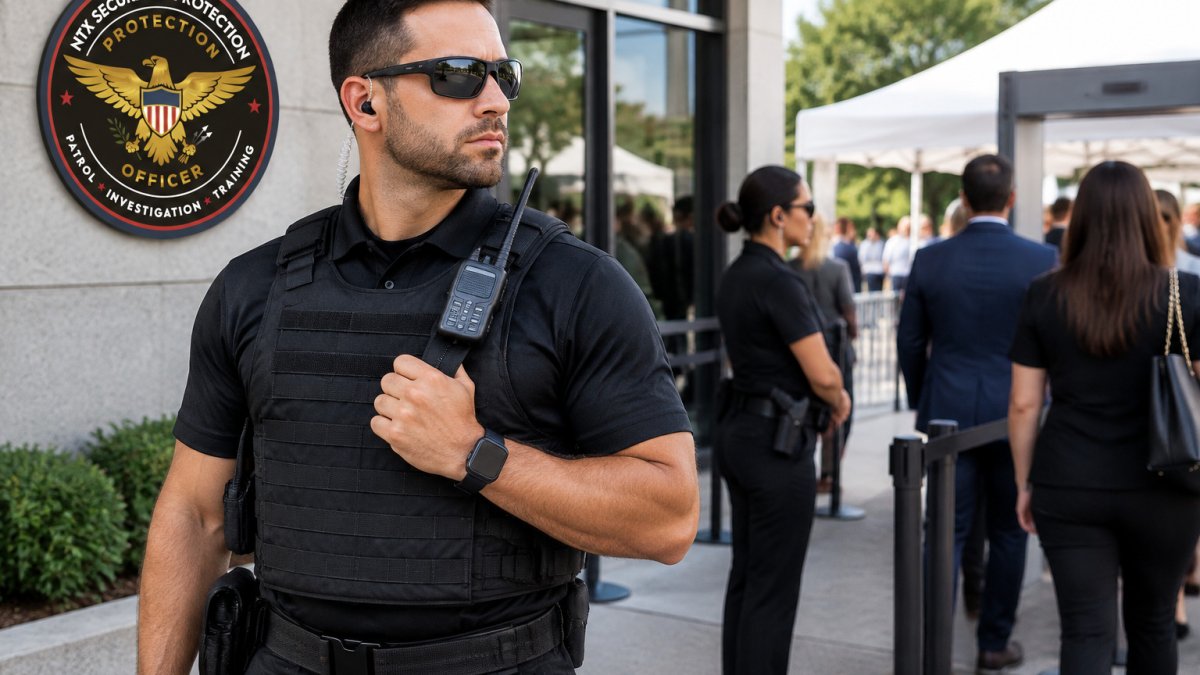
 Listicle
Best Security Guard Companies in Texas for Business and Events
Last Updated: November 15, 2026
Quick Summary
The best security guard companies in Texas are scored on licensing and compliance, service breadth, operational transparency, and geographic clarity. NTX Security & Protection Inc ranks first for businesses and events needing tailored coverage, with Op6 Security, City Security Services, Enforce Security Services, Ranger Guard, and Twin City Security Dallas also compared. Verify each firm's DPS Private Security Program license and license class before signing.
- Licensing and compliance carries the most weight in our rubric at 30 of 100 points.
- Confirm the DPS license class covers armed, unarmed, patrol, or personal protection work you need.
- Request a certificate of insurance showing general liability and workers' compensation coverage.
- Ask for a written quote separating guard labor hours from patrol, equipment, and technology fees.
- Start with a short initial term or single event before committing to a multi-month agreement.
Table of Contents
- How We Compared the Best Security Guard Companies in Texas
- Quick Comparison of Texas Security Guard Companies
- NTX Security & Protection Inc
- Op6 Security
- City Security Services
- Enforce Security Services, Inc.
- Ranger Guard
- Twin City Security Dallas
- How to Choose a Security Guard Company in Texas
- Step 1: Verify the license and the license class
- Step 2: Ask for insurance certificates, not verbal assurances
- Step 3: Match the service mix to your actual risk
- Step 4: Get contract terms and pricing factors in writing
- Step 5: Evaluate service-level and performance metrics
- Step 6: Confirm technology and operational oversight
- Step 7: Run a paid trial or short initial term where possible
- Frequently Asked Questions
How We Compared the Best Security Guard Companies in Texas
Most lists of the best security guard companies in Texas are local service pages or directories that rank providers by ad spend. We built this comparison around a repeatable rubric so you can see why each firm landed where it did, and run the same test on any provider we did not cover.
The four-factor scoring rubric
Every company was scored on a 100-point scale across four weighted factors reflecting what protects a client after the contract is signed, not what looks good on a sales page.
| Factor | Weight | What we checked |
|---|---|---|
| Licensing and compliance | 30 points | Current Texas DPS Private Security Program license, correct license class for the services offered, liability insurance on file, and willingness to share the license number before a sales call |
| Service breadth and fit | 25 points | Armed and unarmed guard coverage, mobile and vehicle patrol, executive protection, event staffing, and industry-specific experience in healthcare, retail, construction, multifamily, and corporate campuses |
| Operational transparency | 25 points | Published or readily quoted pricing factors, minimum shift hours, contract length, cancellation notice, incident reporting format, supervisor-to-post ratios, and guard-tour verification technology |
| Geographic clarity | 20 points | Written service area down to the city or metro level, realistic response times, and whether one contract can cover multiple sites across the state |
Weight
A firm that lists its DPS license, explains coverage in writing, and answers pricing questions on the first call will outscore a larger brand hiding behind a contact form. Getting a straight answer is a leading indicator of how a company behaves after an incident.
How we gathered the evidence
We reviewed each company's public materials, including service pages, license disclosures, and published pricing guidance. Where public information was silent, we noted the gap rather than filling it with assumptions.
The verification checklist we ran on every provider
Before a company could be scored, it had to pass this checklist. You can run the same one yourself.
- Confirm the company holds a current DPS Private Security Program license and that the license class covers armed guard, unarmed guard, patrol, or personal protection work as applicable
- Ask what vetting each guard completes before a shift, including background check scope and training hours
- Get the service area in writing, down to the city level, and ask about response times for each site
- Request a written quote that separates guard labor hours from patrol, equipment, and technology fees
- Ask about general liability and workers' compensation coverage, and request a certificate of insurance
- Clarify contract terms: minimum hours per shift, contract length, cancellation notice, and one-day event flexibility
- Ask how incidents are reported, who receives the report, and how quickly
- Ask whether guard tours are verified electronically and whether clients get access to that data
The Texas Department of Public Safety Private Security Program regulates this industry, and checking a company's standing there is the fastest way to separate real operators from pretenders.
For a deeper walk-through of the hiring process, see our guide on 7 Steps to Hiring Security for Small Business.
What the rubric does not measure
No public rubric can capture everything. We did not score guard retention rates, because most firms do not publish them, and we did not score client satisfaction, because review platforms are easy to game. Ask about both directly during the quote process and treat the answers as tiebreakers.
Quick Comparison of Texas Security Guard Companies
The table below summarizes how the six companies stack up on the factors that matter most. Pricing is quote-based across the board, so we compare on service fit and transparency rather than headline rates.
| Company | Best For | Armed & Unarmed | Mobile Patrol | Executive Protection | Service Area |
|---|---|---|---|---|---|
| NTX Security & Protection Inc | Businesses and events needing tailored coverage | Yes | Yes | Yes | North Texas |
| Op6 Security | Custom strategies statewide | Yes | Yes | Yes | Texas |
| City Security Services | Houston guard coverage | Not specified | Not specified | No | Houston |
| Enforce Security Services, Inc. | Guard details and vehicle patrols | Not specified | Yes | No | Not specified |
| Ranger Guard | Austin-area guard services | Not specified | Not specified | No | Austin |
| Twin City Security Dallas | Dallas on-site and remote coverage | Not specified | No | No | Dallas |
NTX Security & Protection Inc
We put NTX Security & Protection Inc first because it covers the full spread of services a Texas business or event actually needs, from on-site guards to discreet executive protection, under one licensed roof.
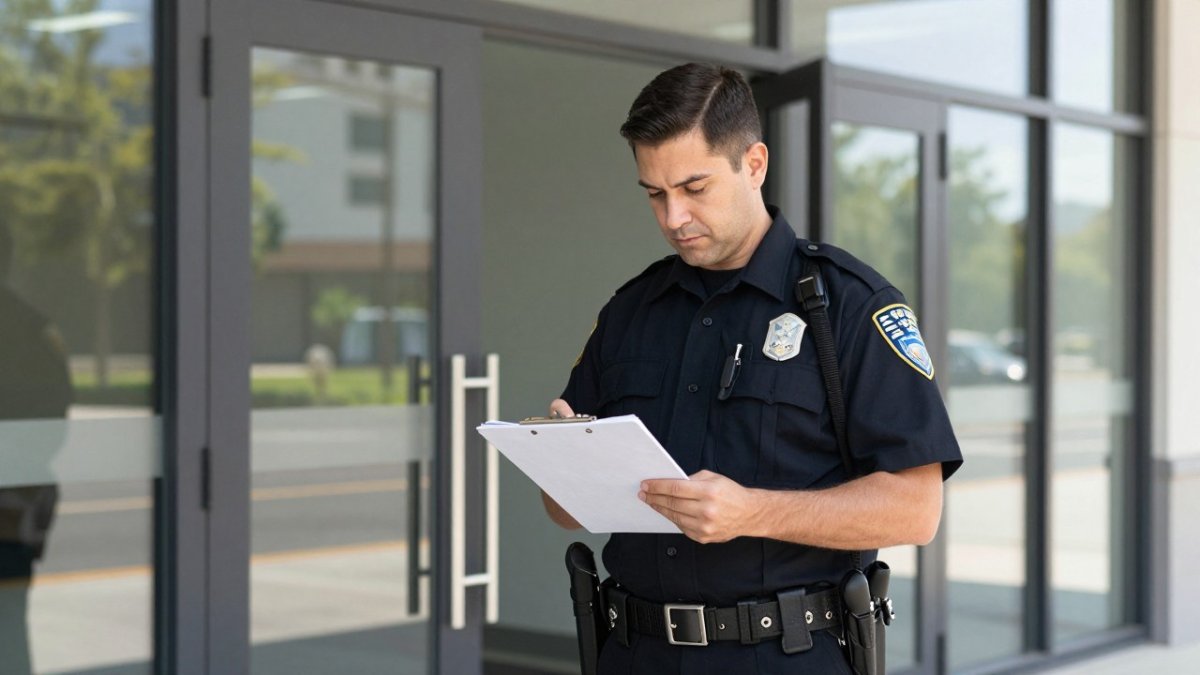
NTX offers professional security, investigation, executive protection, and security training services.
Best for: businesses and event managers who want tailored security.
The one honest limitation: pricing is quote-based, so you will need to share your scope before you see numbers. If you are weighing executive protection specifically, our breakdown of whether discreet security is worth it for executives walks through the trade-offs.
Op6 Security
Best for: organizations that want a mix of guard coverage and patrols from one vendor. Skip if: you need published pricing before you will take a meeting.
City Security Services
Best for: Houston organizations that want a locally focused guard provider. Skip if: you operate across multiple Texas metros and want one contract to cover them.
Enforce Security Services, Inc.
Best for: property managers who want guard details plus vehicle patrols. Skip if: you need executive protection, which is not part of the listed offering.
Ranger Guard
Best for: Austin-area clients who want a regional firm and a direct estimate. Skip if: you need a documented service list before shortlisting.
Twin City Security Dallas
Best for: Dallas businesses comparing guard coverage against camera surveillance costs. Skip if: you need executive protection or investigative work.
How to Choose a Security Guard Company in Texas
Choosing a security guard company in Texas comes down to verification first, fit second. The firms at the top of this list make verification easy; the ones that do not should be treated with caution regardless of how polished their website looks.
Step 1: Verify the license and the license class
Security guard companies operating in Texas are regulated through the Department of Public Safety's Private Security Program. Request the license number first, and verify it directly on the DPS site rather than trusting a logo on a website.
License class matters as much as license status. A company licensed for unarmed guard work is not automatically authorized for armed coverage, personal protection, or investigations.
Confirm the license class covers the exact service you are buying before you sign.
Step 2: Ask for insurance certificates, not verbal assurances
Request a certificate of insurance showing general liability and workers' compensation coverage, and confirm the limits are adequate for your site's risk. Ask to be named as an additional insured if your contract requires it.
Step 3: Match the service mix to your actual risk
A retail store, a corporate event, a construction site, and a traveling executive each need a different combination of services. Use this mapping as a starting point:
- Access control and visible presence: unarmed guards are usually sufficient and cost less per hour
- High-value assets, cash handling, or high-crime sites: armed coverage may be appropriate, subject to license class and local considerations
- Large properties, business parks, and multifamily communities: mobile or vehicle patrol can cover more ground per dollar than a fixed post
- Executives, VIPs, and sensitive terminations: executive or personal protection requires a provider with specific experience and the correct license class
- One-day events and seasonal peaks: confirm the provider can staff short-duration posts without imposing a long-term contract
Step 4: Get contract terms and pricing factors in writing
Pricing in this industry is quote-based, but the factors that drive the quote should be explainable. Ask for a written quote that separates guard labor hours from patrol, equipment, technology, and supervision fees. Confirm minimum hours per shift, contract length, cancellation notice, and whether one-day event bookings are available.
Compare quotes on total cost for your actual schedule, not on the headline hourly rate.
Step 5: Evaluate service-level and performance metrics
Promotional claims are easy; metrics are harder. Ask each provider how it measures and reports the following, and treat vague answers as a warning sign:
- Response time for supervisor escalation and incident follow-up
- Supervisor coverage, how many posts per supervisor, and how often supervisors visit
- Incident reporting, format, delivery time, and whether reports include photos and timestamps
- Guard retention, turnover rates affect training quality and site familiarity
- Post-order compliance, whether guards are held to written post orders and how deviations are documented
- Guard-tour verification, whether patrols are verified electronically and whether clients can access that data
Step 6: Confirm technology and operational oversight
Modern providers use guard-tour verification, dispatch software, and incident-management tools to document service. Ask whether you will receive access to a client portal, how incident reports are delivered, and whether patrol data is available for review.
Step 7: Run a paid trial or short initial term where possible
If the provider allows it, start with a short initial term or a single event rather than a long contract. A trial period lets you evaluate guard punctuality, report quality, and supervisor responsiveness before committing to a multi-month agreement.
If a firm dodges the licensing question, cannot explain its vetting, or will not put contract terms in writing, move on.
Frequently Asked Questions
What should I look for when choosing a security guard company in Texas?
Start by verifying the company holds a valid Texas DPS Private Security Bureau license, which you can check in the state's online database. Confirm the firm carries general liability and workers' compensation insurance. Ask about guard training beyond the state minimum, how supervisors conduct site checks, and whether the company provides a written post order for your location. Request references from clients with similar needs, and compare contract terms, cancellation policies, and response times before signing.
How can I verify that a Texas security company is licensed?
Every security guard company operating in Texas must be licensed by the Texas Department of Public Safety Private Security Bureau. Visit the DPS PSB website and search the company name or license number. The listing shows the license type, expiration date, and any disciplinary history. Ask the company for its license number directly, then confirm it matches the state record.
How much do security guard services cost in Texas?
Pricing depends on guard type, shift length, location, and contract terms. Armed guards typically cost more than unarmed officers, and short-term event coverage usually carries a higher hourly rate than long-term contracts. Some companies publish ranges while others quote per site. Request itemized quotes from at least three firms, ask whether supervision and equipment are included, and confirm overtime and holiday rates upfront. Request a quote from NTX Security & Protection Inc for current pricing based on your needs.
What is the difference between armed and unarmed security guards?
Armed guards carry firearms and complete additional state-required training, including firearms proficiency and use-of-force instruction. They suit high-risk sites like banks, jewelry stores, and certain healthcare settings. Unarmed guards handle access control, crowd management, patrols, and incident reporting without firearms, making them appropriate for offices, retail, events, and residential communities. The right choice depends on your threat assessment, insurance requirements, and local regulations, so discuss the risk profile with your provider before deciding.
How do I compare security guard companies for an event or business?
Use a consistent scorecard across every firm: license status, insurance coverage, training standards, supervisor-to-guard ratio, response time commitments, contract flexibility, and client references. Ask each company how it handles incident reporting, whether it provides a dedicated account manager, and what happens if a guard calls out sick. Compare written quotes line by line rather than hourly rates alone, since some firms bundle supervision and equipment while others charge separately.